

Our Mission
To heal and empower any person with substance abuse disorder in a safe, nurturing environment to assist them in becoming a respected, responsible, productive member of the community.
About Us


Co-founders John McManus
Medical Director Ruby Bayan, MD
In 2015, John McManus and Ruby Bayan, MD, an adult, child and addiction psychiatrist shared a common vision to provide the best care needed for those suffering from addiction in our community. With more than 50 years of experience between them in this field, they collaborated with other community stakeholders to bring their vision to life.
Waterfront Recovery Services is the first medically managed detox program in Humboldt County certified by the State of California Department of Health Care Services to provide Incidental Medical Services.
Congressman Jerad Huffman tours Waterfront with aide John Driscoll, John McManus and Dr. Bayan. (right).
Co-founder John McManus and Medical Director Dr. Ruby Bayan meeting with political leaders and community partners. (below)


Addressing the Needs of a Community in Crisis
Addiction Studies - Wellness Practices - Life Skills
Employment Opportunities - Transition Support
Waterfront Administrative Staff

Jamaica Bartz
Executive Director
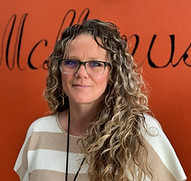
Rebecca Camilli
Chief Operations Officer
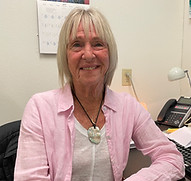
Dr. Landon Whittington
Medical Director
Jackie Coghill
Nurse Practitioner


Estelle Mitchell
Administrative Assistant
Office Manager

Stacy Smith
Director of Admissions
Keith Cezario - Residential Counselor
STAFF PROFILE


Keith Cezario, at home at WRS
Asked to describe the difference between his life now and his life when he was drinking, Cezario opens up: "When I was drinking, every day was a little more miserable. I wasn't inspired by anything. There were points where I really didn't care if I woke up or not — it was dark, and I went through a lot of dark times drinking."
There was a shift during that second stay at Waterfront. "Something happened while I was in treatment here that's honestly hard to explain. Call it a spiritual awakening or something — it lit a fire in me. A bunch of people, both here and at other facilities I'd been to, told me I should give counseling a shot, that I might be good at helping others."
But it was something deeper that created the shift. When asked whether his son had something to do with his decision to get sober, Cezario doesn't hesitate: "He had everything to do with it. It never really occurred to me until I became a dad. I decided in my own head that I needed to get my act together and figure out how to quit completely. I wasn't sure how it was going to go, but I needed to give it a real shot so I could be a good dad. I'd told myself since I was young that if I ever had a kid, I was going to take care of them, whatever that meant. Drinking was the biggest barrier to being a good father — and honestly, to being a good person in general." His son is six now. "When I left, he was really small — maybe two or three," Cezario says of the treatment stay that set everything in motion.
Cezario did a 60 residential program. "I signed up for College of the Redwoods before I even left here. I'd originally planned to do 90 days in the program, but I left a little early to be home for my son's birthday and to get ready for school. I didn't want to do online classes so I left here in August 2022, did two years of school. I don't think they expected me to come back, but I kept telling them I would. After about a year and a half, I came back and started interning, and they hired me right away. The rest is history — I've been here three years now, almost to the day."
He wasn't alone in that transformation. His wife — the mother of his son — walked almost the identical road, at the same time, on the same campus. "We both went to rehab, both saw the light, if you will, and got healthy and changed our whole outlook. We went to school together, took every class together, did our internships here together, and we both got hired here." They married three years ago, after seven years together — a relationship that survived active addiction on both sides before it became, in his words, a shared commitment to "helping others" that "feels like our duty, in a way."
These days, the contrast with those "dark times" isn't abstract for Cezario — it shapes how he shows up for the people coming through Waterfront's doors now. "Now, I'm grateful for everything. I've learned to see different perspectives on things — no judgment, no resentment. Now I have a real appreciation for being alive — waking up sober, not feeling like crap, getting to go to work. I don't feel like it's 'work' because of the friendships I've built here."
Part of that appreciation comes from how far his body has traveled, too. "I used to be a manual-labor guy — busted my butt for years and years, and my body was ready to give up on me. Now I'm at a desk, on a computer all day, and I actually enjoy it."
Asked what he'd say to an old friend still struggling with drinking or drugs who might be considering treatment, Cezario keeps it simple, the same way he says he keeps his one-on-ones simple: "I'd just be honest: this place saved my life. I think it can work for anyone who's serious about quitting and changing their life around.
Waterfront is way more than just a job — it changed everything for me, no joke." He's heard, more than once, that people out on the streets knew his name before they ever met him — word that he was someone who could help. "That blew my mind," he says. "It's humbling — it makes you feel warm and fuzzy, honestly."
Asked where he sees himself in five years, there's no ambiguity. "I don't plan on doing anything different for the rest of my life, work-wise... I'd prefer to stay at Waterfront until I can't work anymore. This was never about making money — I've made and squandered plenty of money in my life. Obviously I get paid, and they take great care of me — it's a very family-oriented place."
He leaves it there, simply: "I think everybody who works here loves this program — we believe in it, and we want to keep it going. Addiction is always going to be present, so hopefully we all keep that passion to actually help people. That's all I've got."
Waterfront Recovery Services: Committed to Community, Committed to Connection
At Waterfront Recovery Services, our commitment to recovery extends far beyond our doors. Our entire staff — including our administrators — regularly steps out into the community to connect with individuals and families seeking support for themselves or a loved one.
This spirit was on full display at the recent Recovery Happens 2026 event at Sequoia Park in Eureka. Our team was there alongside clients, celebrating a day filled with music, food, and friendship. Events like this give our clients the chance to meet others who have walked the path of recovery and come out stronger on the other side — living proof that lasting change is possible.
We also use these gatherings to connect with other local organizations, strengthening the network of resources available to anyone in our community who needs support. It's a reminder that recovery isn't just about treatment — it's about community, connection, and hope.

Top: Stacy Smith-Director of Admissions, Jamaica Bartz-Executive Director, Rebecca Camilli-Chief Operations Officer, Bonnie Smith-Detox Counselor
Below: ED Jamaica Bartz sporting her new Recovery Happens 2026 t-shirt!

Executive Director, Jamaica Bartz
Nurse Practitioner, Jackie Coghill
Director of Admissions, Stacy Smith
Case Management/Admin Assistant, Estelle Mitchell
Intake Coordinator, Kasee Duncan
SUD Counselor, Joel Grosh
Kitchen Manager, Jesse Pearson
Front Office, Michael Wentworth
SUD Counselor Michele Shively
Kitchen Co-Manager, Jessica Pearson
Admissions Assistant, Michele Asbury
Alcohol Drug Care Services opened Waterfront Recovery Services in the fall of 2017 to provide medically supervised detox and addiction therapy. Our staff of medical professionals and counselors specializing in addiction issues work continuously to develop compassionate and effective programs for residents in an effort to treat the whole person.
Detox Counselors at Waterfront case manage for individual SUD (Substance Use Disorder) recovery and general health care. WRS also provides services for dual diagnosis clients with secondary mental health issues.
Extra curricular exercise programs, yoga, art workshops, and a variety of spiritual practices scheduled on site bring inspiration and vitality to the process of putting lives back together.
Resumes, job interview skills, cooking classes, budgeting are some of the offerings our transitional housing staff make available.
"
Thank you Waterfront staff! I love you all and appreciate your care and encouragement. You have given me a good starting board for my recovery journey; I will miss all of you.
"
. . . really pulled through for me in detox going above and beyond, helping me through a very tough time. I should be getting my daughter back very soon. Thank you so much.
John McManus 1964 - 2022
indebted to this tenacious and compassionate man.
Family, friends and community collaborators came together at his memorial to celebrate the life of this powerhouse that ended too soon due to ALS. Speakers shared stories about McManus as loving father, smart, compassionate advocate, amazing musician and most of all, hilarious friend. Laughter marked most interactions with him and this occasion was no different. There was a general sense of appreciation that we had this wonderful man in our lives.

It is with great sadness that we acknowledge the passing of Alcohol Drug Care Services’ Executive Director and Waterfront co-founder John McManus. He was a fearless, street-smart visionary who insisted on raising the bar for care in our community. McManus walked the walk and showed others the way. We will forever be
"
My counselor couldn’t have done a better job. He always had time for me and gave me excellent care. I was given the same from detox staff all the way to the good food of the kitchen staff. Thank you!
Community Steps Up To Honor
John McManus and Support WRS
Sunday June 5th. Click here for info.
Medical Director Dr. Ruby Bayan on Community Voices
Waterfront Recovery Services provides a medical model for Substance Use Disorder designed by Dr. Bayan and Co-founder John McManus.
Waterfront Recovery Services Board of Directors

Dennis Leonardi - Board President

Lea Nagy - Secretary

Jacob Rosen - Vice President

Stuart Altschuler

Dylan Feierabend - Treasurer

Shannon Chavez, MD